

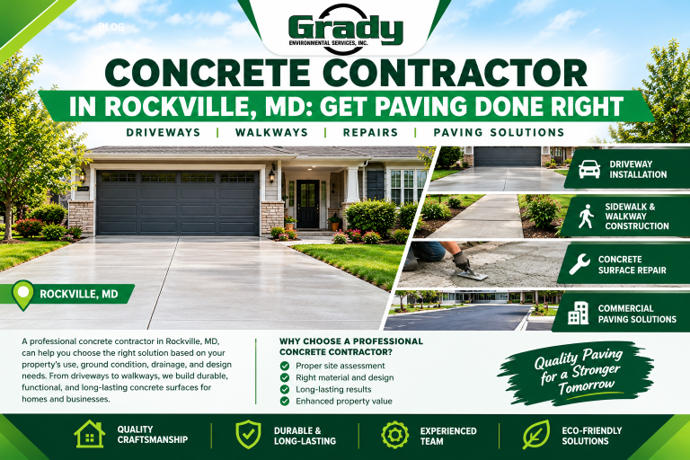
A strong concrete surface makes it easier to access a property, handle daily traffic, and keep outdoor areas looking clean. Cracked driveways, uneven walkways, and damaged pavement can affect both the look and use of a property. An experienced contractor can help property owners understand their choices and plan the right work. A professional concrete contractor in Rockville, MD, should check how the area will be used, the condition of the ground, how water drains, and what work is needed before recommending a suitable concrete solution.
What Concrete Services Can Improve Your Property?
Concrete projects depend on the property’s layout, the condition of the existing surface, and how the area will be used. Homeowners may need a new driveway or a walkway connecting different parts of their property. Business owners may need strong paved areas around entrances, parking lots, and other spaces used by people and vehicles every day.
Common concrete services include:
- Concrete driveway installation: Creates a solid entrance and parking area that suits the property and the vehicles that use it.
- Sidewalk and walkway construction: Creates clear paths between entrances, parking areas, and outdoor spaces.
- Concrete paving: Provides useful paved areas around homes and commercial buildings.
- Concrete surface repair: Fixes damaged areas with cracks, chips, or other surface problems.
- Existing pavement removal: Removes damaged or unsuitable concrete before new work begins.
The right option depends on the site’s condition and how the finished area will be used. Before work starts, discuss the size of the area, access needs, ground preparation, and the finish you want. These details help everyone understand the work and reduce confusion during the project.
Residential and Commercial Paving Solutions
Residential and commercial paving projects have different needs. Homeowners often focus on easy driveway access, how their property looks, and moving around their homes safely. Businesses must also think about customers, workers, delivery vehicles, and daily activities.
For homes, a well-planned driveway or walkway can make outdoor areas easier to use. The contractor should check the ground, build a strong base, and make sure rainwater can flow away from the paved area. The size of the surface and the weight it needs to hold also affect the work.
Commercial paving needs careful planning to avoid disrupting daily business activities. Entrances and walking paths should fit the property, while areas used by vehicles need a strong base to handle regular traffic. The work should also be planned to reduce delays for customers, workers, and deliveries.
Property owners can also plan paving alongside other outdoor work. For example, scheduling commercial painting in Rockville, MD alongside concrete work may help businesses organize their outdoor improvements. Each job should be reviewed separately to decide what needs to be done, which task should come first, and how the area should be prepared.
Concrete Paving and Asphalt: Key Differences to Consider
Concrete and asphalt are both used for driveways and other paved areas, but they have different features. Comparing them based on your property’s needs can help you choose the right material.
Concrete provides a firm surface for home driveways, walkways, sidewalks, and some commercial areas. Its appearance can suit different types of properties. However, the quality of the work, ground movement, weather, and drainage can affect how well it holds up over time. Cracks may form when the surface or ground beneath it moves or comes under stress.
Asphalt is another option for driveways and parking lots. Its dark surface may suit property owners who prefer a smooth, even look. However, asphalt also needs proper installation and regular care, and it may need resurfacing over time. These costs should be considered when planning a budget.
If you are considering an asphalt driveway in Cloverly, MD, compare the material’s suitability based on traffic, ground conditions, drainage, upkeep, and your budget. Ask for a detailed estimate that explains the work included instead of comparing prices alone.
Neither material is the best choice for every property. The right option depends on how the area will be used, the work needed to prepare the ground, local weather, and how much upkeep the owner can manage.
How Should You Evaluate a Concrete Contractor?
Choosing a contractor involves more than picking the lowest price. Good planning, strong materials, careful work, and clear communication all affect the final result. Before hiring a contractor, check their experience and ask how they will meet your needs.
Use these points to help you choose:
- Similar work experience: Ask whether the contractor has worked on similar driveways, walkways, or commercial paving projects.
- Clear prices: Ask for a written estimate that covers labor, materials, ground preparation, removal, and any extra costs.
- Work methods: Ask how the team will prepare the ground, direct rainwater away, and build the new surface.
- Work schedule: Confirm the start date, expected finish date, and possible reasons for delays.
- Past work and customer reviews: Look at photos of finished projects and speak with past customers when possible.
- Written warranties: Check whether the contractor covers the work or materials and ask about any limits or rules.
Pay close attention to what each estimate covers. One contractor may include old concrete removal and ground preparation, while another may charge extra for these tasks. Comparing all the work and costs helps you choose fairly and avoid unexpected bills.
You should also discuss how people and vehicles will enter the site, how nearby buildings will be protected, how waste will be removed, and how the work area will be kept safe. Clear plans help the project run smoothly from start to finish.
