

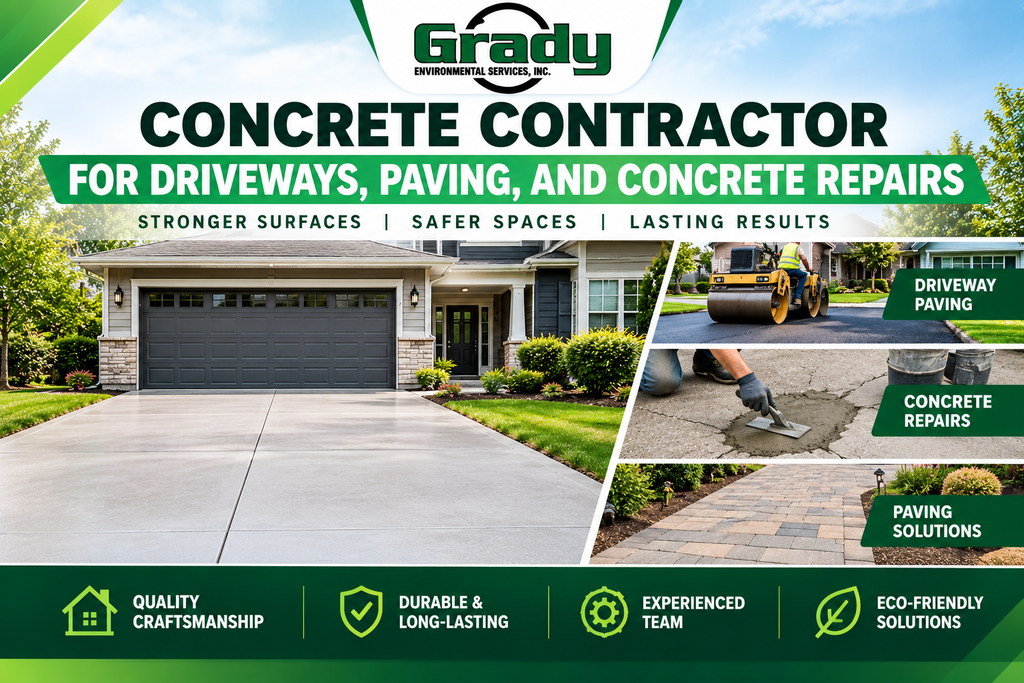
Concrete problems can start small but create bigger property issues over time. A cracked driveway can worsen with traffic and weather. Uneven pavement can affect vehicle access. Damaged walkways can also create problems for people entering or moving around a property. If you need a concrete contractor Rockville, MD, the right contractor should look beyond one crack or broken section and understand how the entire surface is used.
What Does a Concrete Contractor Actually Handle?
Concrete contractors do more than pour new slabs. Their work can cover repairs, driveway construction, paving, removal of damaged concrete, walkways, and other outdoor surfaces.
The first step should be understanding the condition of the existing surface. A contractor needs to look at the size of the damage, the surrounding concrete, drainage, traffic, and how the area gets used.
Typical projects can include:
- Concrete driveway construction and replacement
- Cracked and chipped concrete repairs
- Concrete paths and walkways
- Damaged surface removal
- New concrete installation
- Paving for driveways and property access
- Repairs around commercial buildings
- Concrete work for residential properties
This approach helps prevent a common mistake: fixing the visible damage while overlooking the reason it happened.
Driveways Need More Than a Smooth, Fresh Surface
A driveway has to handle regular vehicle movement while giving people reliable access to the property. That sounds simple, but the demands can vary greatly.
A residential driveway may mainly handle cars belonging to the household. A commercial driveway can see delivery vehicles, employees, customers, service trucks, and other traffic throughout the day.
The existing layout also matters. An old driveway may have poor drainage, damaged edges, uneven sections, or a surface that no longer works well with the property.
In some cases, repairing one section makes sense. In others, replacing the driveway can provide a better long-term solution. The right choice depends on the actual condition of the surface rather than a one-size-fits-all recommendation.
When Should You Repair Concrete Instead of Replacing It?
A crack does not automatically mean the entire surface needs replacement.
Small cracks, chips, or isolated damage may be suitable for repair if the surrounding concrete remains in good condition. A contractor can examine the damaged area and determine whether the existing surface still provides a solid base.
Replacement may make more sense when the damage covers a large section or keeps returning after previous repairs. Major settling, widespread cracking, broken sections, and serious deterioration can all point toward a larger project.
The cheapest option today is not always the cheapest option over time. Repeated repairs can add up if the underlying problem remains.
Concrete Repairs Can Address More Than Visible Cracks
Concrete damage often tells you that something else is happening.
Water can enter damaged areas. Ground movement can cause sections to settle. Heavy traffic can put repeated stress on a surface. Age and weather can also weaken exposed concrete.
So, a repair should not focus only on making one crack disappear.
For example, imagine a damaged walkway near a commercial entrance. The crack may be easy to see, but the surrounding surface may also have uneven sections or drainage problems. Fixing only the crack could leave the larger issue untouched.
Commercial Properties Need Concrete That Handles Daily Traffic
Commercial properties often put more demands on concrete than residential properties. Parking areas, entrances, loading zones, walkways, and access points may deal with constant movement throughout the day.
A cracked surface can become more than an appearance issue. Uneven concrete may affect foot traffic. Damaged pavement can interfere with vehicle movement. A worn entrance can also make a commercial property look poorly maintained.
Property managers may also have several projects to coordinate at once. Concrete repairs could happen alongside painting, paving, maintenance, or restoration work.
For example, a property owner looking into commercial painting Rockville, MD, may also find damaged concrete around entrances, sidewalks, or parking areas. Handling related work as part of one property plan can reduce the need to coordinate every task separately.
Paving Connects Driveways, Parking Areas, and Property Access
Paving affects how people and vehicles move through a property.
A driveway connects the road to the property. Parking areas give vehicles a place to stop. Walkways connect people to entrances. Service areas need clear access for deliveries and maintenance vehicles.
When one of these areas starts to deteriorate, the problem can affect how the rest of the property functions.
Both asphalt and concrete can work for different applications. The right option depends on the property’s layout, traffic, existing surface, expected use, and project needs.
That is why paving should start with the property itself rather than simply choosing a material first.
What Should You Look For in a Concrete Contractor?
A low quote may look attractive, but it does not tell you how well the contractor understands the project.
Look for a contractor that can explain what caused the damage, what options you have, and why one approach makes more sense than another.
Ask practical questions such as:
- Can the existing surface be repaired?
- Does the damaged area need complete replacement?
- What caused the cracking or settling?
- Will the old concrete need removal?
- Could drainage be contributing to the problem?
- How will vehicles and pedestrians use the area during the project?
- Are other property improvements needed at the same time?
Clear answers can help you compare contractors based on the actual work involved rather than price alone.
The Right Concrete Plan Starts With the Property, Not a Template
Every property uses its outdoor surfaces differently. A homeowner may need a new driveway for daily family vehicles. A commercial property may need concrete around a busy entrance. An apartment complex may need repairs across several pedestrian areas.
That difference should shape the project.
It can also reveal other work that needs attention. For instance, a property owner considering exterior painting Annapolis, MD, may also notice worn concrete, damaged walkways, or deteriorating driveway edges around the building.
The goal is not to bundle unrelated services. Instead, it is to identify connected property problems and plan the work in a sensible order.
How Long Does a Typical Concrete Project Take?
Concrete projects do not all follow the same timeline.
A small repair can take much less time than removing and rebuilding an entire driveway. Larger commercial projects may require additional planning because crews need to consider vehicle access, pedestrians, existing structures, and daily business activity.
Weather can also affect outdoor work. The condition of the existing surface matters too. Removing damaged material and preparing the area can add work before new concrete or paving even begins.
A contractor should explain the main stages of the project and provide a realistic timeline based on the actual site.
Concrete Work Requires More Planning Than It Seems
Good concrete work starts before the first piece of damaged material comes out.
The contractor needs to consider the surface, surrounding property, drainage, traffic, access, and future use. Skipping those details can lead to repairs that look good at first but fail to address the real issue.
Property owners should also avoid waiting until damage becomes severe. A small repair may become a larger replacement project if deterioration continues unchecked.
Planning ahead can also help coordinate related improvements. If a property already needs paving, painting, maintenance, or restoration, the owner can consider how those projects fit together rather than treating every issue as a separate emergency.
Key Takeaways
Concrete, paving, painting, maintenance, and restoration can overlap on the same property. A commercial building may need concrete repairs near an entrance while other areas need painting. A residential property may need driveway work after years of wear. A damaged building may require restoration followed by additional repairs.
For property owners looking for a concrete contractor Rockville, MD, Grady Environmental Services, Inc. offers more than concrete work. The company handles construction, facilities maintenance, property restoration, painting, concrete, paving, and related property services. Our broader service range helps residential and commercial property owners manage connected projects through one contractor. That can make planning easier when concrete repairs are only one part of a larger property improvement or maintenance project.
Frequently Asked Questions
How long does a concrete driveway project take?
Project timelines vary based on driveway size, removal needs, site conditions, weather, preparation, and the type of work required.
Can a concrete contractor handle commercial property repairs?
Yes. Commercial projects can include concrete repairs, paving, walkways, entrances, parking areas, and other heavily used property surfaces.
What causes concrete driveways to crack or settle?
Poor drainage, ground movement, heavy traffic, weather exposure, age, and underlying surface problems can contribute to cracking and settling.
Should damaged concrete always be replaced?
No. Minor cracks or isolated damage may only need repair, while widespread deterioration may call for complete replacement.
